On September 17, OpenAI launched Astra for Law. The announcement led with the model and the ecosystem: frontier intelligence built for your practice, powered by GPT-6 Astra, with 26 partner-built plugins and 47 community plugins for legal work inside ChatGPT, and data privacy named as a core feature.
The part that matters was reported separately. Astra for Law ships with a legal search index covering more than 99.9% of published US precedential case law.
That is not a model capability. It is a corpus, and it is the one thing in this launch that a competitor cannot answer by routing to a better model.
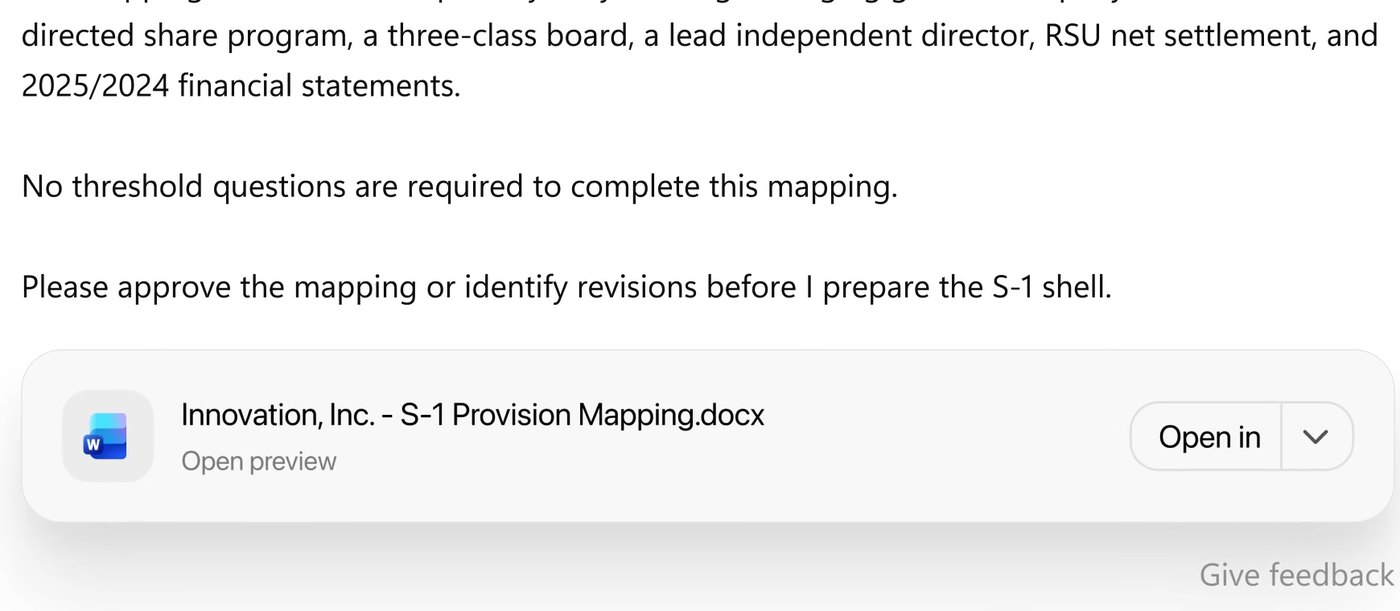
The demo shows the harness, not the index. Frames from OpenAI’s launch video on X (1).
The application layer answered the next day
Max Junestrand, CEO of Legora, posted on September 18 without naming the launch:
Junestrand
"There is no best model. There's a lot of noise about models right now. Who is training them, who owns them, where legal intelligence should live. One question actually matters: what produces the best outcome for the legal task in front of you?"
He is right, and it is the correct defence against a model. Model-agnostic routing means a vertical company survives every leaderboard change, which is exactly what has made the application layer durable for two years.
But routing is an answer to a model and no answer at all to an index. You can route around GPT-6 Astra. You cannot route around 99.9% of US precedential case law if your alternative reaches 60% of it, because there is nowhere else to route to. The response to a corpus is another corpus.
What the vertical companies actually own
This is not a eulogy for Legora or Harvey, and the numbers say why.
Legora's own first-party figures are 36% month-on-month net new ARR, a 78% pilot win rate, 95% gross retention and over 300% net revenue retention. The week before the OpenAI launch, it signed Salesforce as a customer, which Oliver Molander read correctly: "You are at peak enterprise GTM when you sign Salesforce as a customer and not the other way around." A three-year-old Stockholm company selling vertical AI to the canonical enterprise software vendor.
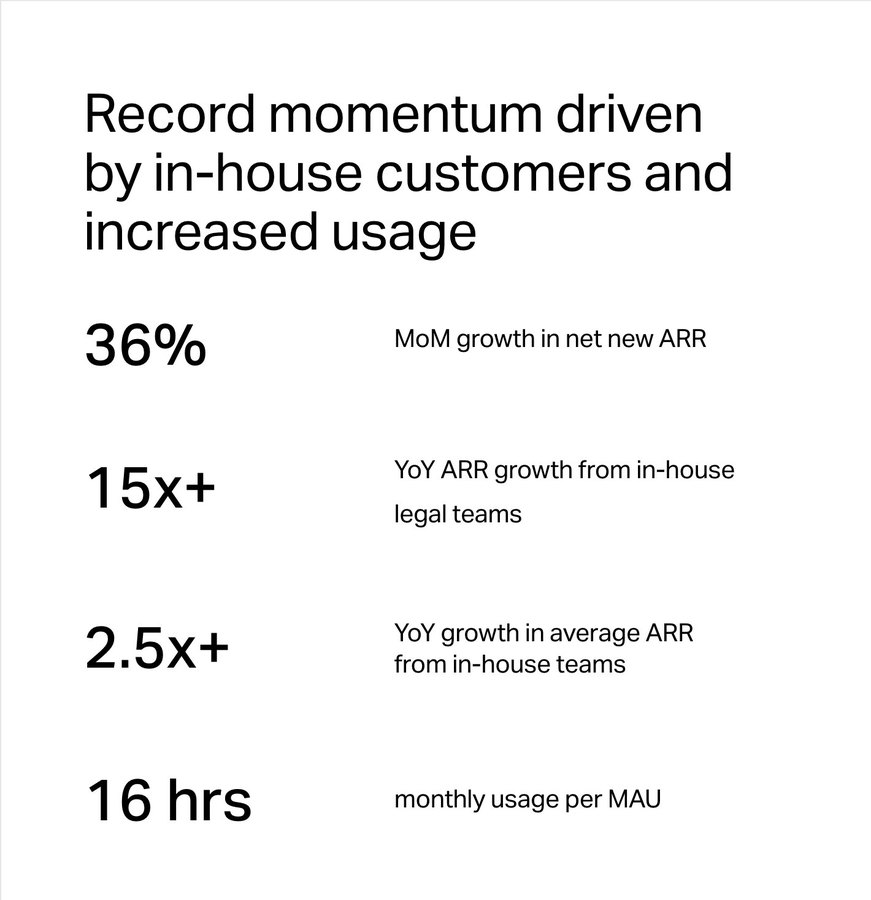
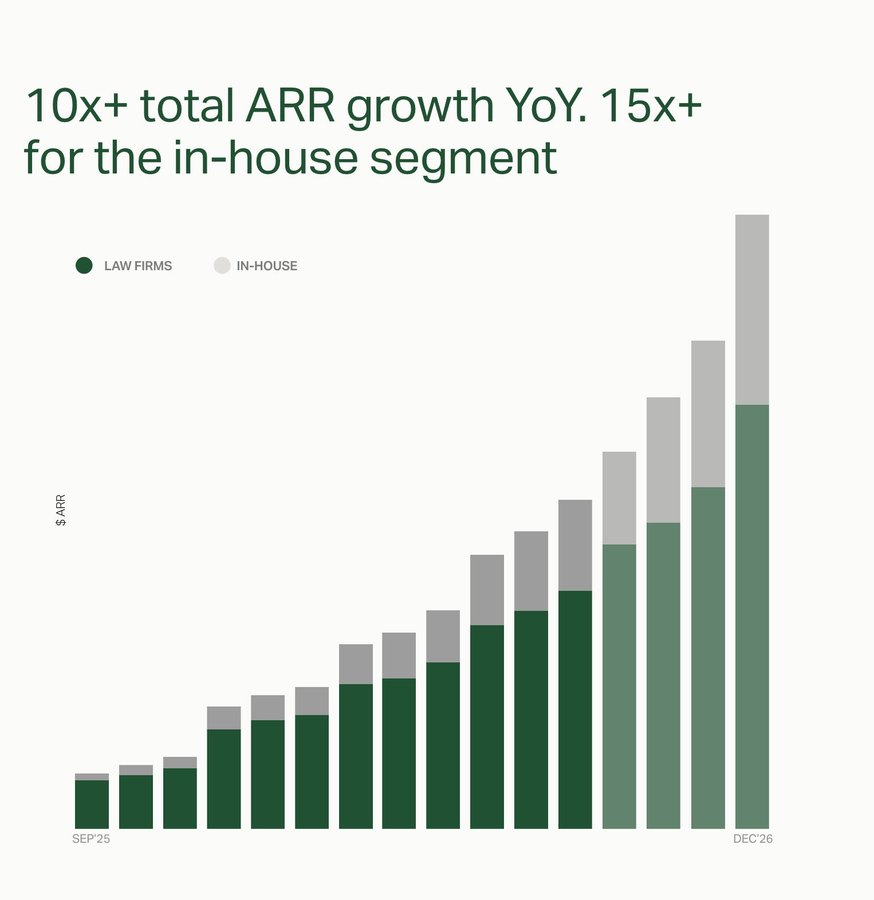
First-party figures, unaudited. Legora slides posted by David Neckstein on X (1, 2).
Retention like that is not a product that is about to be replaced by a plugin directory. It describes something the customer cannot easily leave, and the thing they cannot leave is not the model.
It is their own matter history. The firm's precedents, its playbooks, its risk thresholds, its escalation rules, its edge cases. Published case law is the floor that everyone eventually stands on. What a firm has argued and how it argued it is the part that is unique, and it is the part the incumbent's index does not contain.
Harvey's answer to the same pressure is worth noting because it is a different one: an open-weight model post-trained on roughly 1,750 legal-task environments averaging about 50 criteria per assignment. Manufacturing the curriculum rather than buying the corpus.
The question this hands every other industry
Legal is early, not special. The pattern generalises to any sector where a frontier lab can acquire or license the reference corpus, which is most of them.
So the question to ask about your own position, and it is a procurement question rather than an AI one: what is the reference data in our industry, who owns it, and what do we have that is not in it?
If the honest answer is "nothing, we just read the same public sources faster," that is a routing business and routing is not a moat. If the answer is "six years of how we actually decided things," you own the half that cannot be indexed by somebody else, and the work is making it reachable. See Your AI Doesn't Know How Your Company Actually Works.
Two numbers to keep out of this
A figure has been circulating that Astra for Law "gets legal research right 54% of the time," pointed at 230 million documents, framed as OpenAI's own test result. That is a third party's restatement, not OpenAI's published headline. OpenAI's own launch copy makes no accuracy claim. Do not cite the 54% as OpenAI's number, and be careful of anyone who does.
The 99.9% corpus figure was itself reported rather than stated in the launch announcement, so it deserves a source check before it goes in a deck. It is the load-bearing number in this whole story, which is exactly why it should be the one you verify.
What is not in dispute: a frontier lab built the vertical harness itself, shipped it with a plugin ecosystem, and the durable asset underneath it is a data holding rather than a model. The application layer's standing defence just met the one thing it does not defend against.
Keep reading.
Teardowns, benchmarks and playbooks on building AI-native products.
Browse the Playbook →