Your first Grok Bot should be the one you need most. Inbox triage, outbound, the thing eating your Tuesday. Build it and use it.
Your second one should not be useful at all. It should manage the first one.
That sounds like org-chart cosplay until you notice where it came from. Two sources landed on it independently inside a week: practitioners reverse-engineering the public threads, and SpaceXAI's own docs. Both are correcting the same beginner move.
One job per bot beats one smart bot
Matt Van Horn swept X, Reddit and YouTube two days after launch, hunting for what every workflow that worked had in common. He found three properties. The second is the game.

Van Horn
"A fleet of narrow bots. One job per bot, handoffs between them, usually routed through a chief of staff. The single do-everything bot is the beginner mistake the follow-up threads keep correcting."
The docs arrive from the other direction. SpaceXAI says a job such as General Helper "gives the Bot less guidance and makes its saved context harder to reuse," and that you should "add another Bot only when the work has a stable specialist role."
The reason is not tidiness. It is context reuse. A narrow bot accumulates memory that stays retrievable, because everything it learned is about the same job. A general helper accumulates a pile nothing can index. Six weeks in, the narrow bot is better than it was on day one and the general helper is exactly the same.
The roster cap is 50 bots and group chats per account. Nobody is hitting it. The constraint is your ability to write 50 job descriptions worth writing.
Build the advisor before you build the workers
Peter Yang's method skips the cold start. Build an advisor bot first and pin it to the top. Tell it about your work and your life, then ask it to propose the roster. His prompt opened with "I'm a creator and founder of Behind the Craft. I have two daughters and I live in the Bay Area..." and asked it to "suggest five bots that can save me time or money."
The advisor then creates the other bots for you. It holds the messy context about who you are, so the specialists stay clean.
It then becomes the chief of staff, one of eight reference roles SpaceXAI ships: Sales Outbound, Talent Scout, Paid Media, Expense Manager, Product Performance, Bug Reproduction, Account Health, and Chief of Staff, described as a "source-linked digest of what changed and what needs attention." Seven specialists, one router. That ratio is the design.
The plumbing is real: bots message each other, share context in threads or group chats, pass ownership, and run in parallel on the shared computer. Van Horn's version: "make your second bot a chief of staff, then stop opening the other chats."
Nate Herk's standing instructions belong in the router's job description. Before doing a task, check whether another bot owns it, delegate first, do it yourself only when no specialist fits. Ask the chief of staff which specialists to build next given current capabilities and gaps. Segment the memory: "company facts go in shared so every agent sees them, and the rest stays between you" and the individual bot.

Lovin
"With Grok Bot you don't juggle threads, you juggle named/personified agents. This seems like a ~fine mental model: hire a team of specialists that can talk among themselves to get work done."
He also flagged the friction: working across specialists is harder than working inside one. Absorbing it is the router's job.
What a real roster looks like
Miles Deutscher published his five on August 18, named like staff because that is how you end up thinking about them.
Alex, research assistant, scans the YouTube channels in his niches at 6am daily. Sandra, real estate scout, checks listings twice a day against his criteria and is currently finding villas priced 26 to 37 percent under comparable listings. Jonathan, CFO, reads live brokerage data through a Google Sheet API connection and files a daily portfolio brief. Lucy, EA, lives in the company Slack and runs morning triage. Oscar is the generalist.
Four of the five have a schedule and a data source. Oscar has neither, which is why Oscar is the overflow bucket and not the roster. One general helper on a team of five is a shock absorber. Five is the mistake the docs warn about.
One mechanic makes rosters scale. Duplicating a bot copies profile and settings but not conversation history or learned memory, so you can template a role across regions without the context bleed.
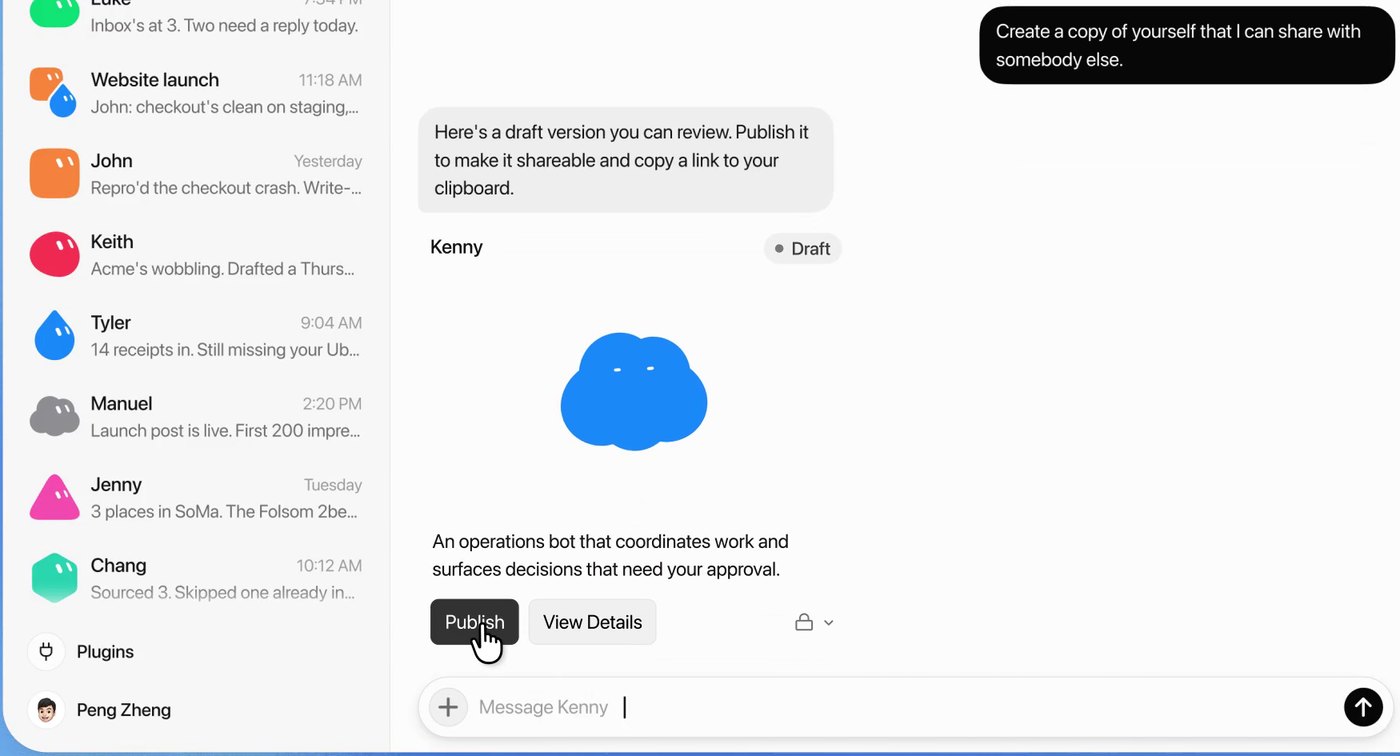
Frame from SpaceXAI’s templates video on X (1).
Where it breaks
Avi Chawla's warning is the one to take seriously: over-coordination degrades output. Push work across four or more bots in parallel and you get duplicate work and noise instead of throughput. One bot per stage. If two bots can both claim a task, you have an argument, not a fleet.
The second failure is scoping. A plumbing company owner with zero engineers went from download to automated dispatch in 24 hours, then published the part most people skip: "Dana Dispatcher, the first bot I ever fired (my fault). Slow, very slow, and would make mistakes."
Note the parenthetical. Not a bad model, a bad job description. Scoping is the skill, and it is the hiring skill: name the outcome, the inputs, what it must never do, what "done" looks like on a Tuesday.
Herk's fix is a "Grill Me" skill: the bot interviews you until you both agree on what you are asking for. He runs it before quarterly planning and any new automation. A job description interview conducted by the candidate.

Shah
"People are already writing job descriptions, training new hires, adding managers, and firing bad fits with Grok Bot. Software adoption is starting to look a lot like company building."
What separates a compounding roster from 12 abandoned chats is not prompting. It is management. Narrow the job, write it down, put someone in front of the roster, fire the bad fits.
Hire, don't prompt.
Keep reading.
Teardowns, benchmarks and playbooks on building AI-native products.
Browse the Playbook →