When Grok Bot launched on August 11, the open question was whether an agent that signs into your tools like a person would survive contact with real work. Nine days in, the answer arrived as a flood of practitioner reports, a community bot directory, and an organizational pattern nobody planned: employees running teams of bots, with one bot managing the others.
Quick recap of what shipped: your account gets one persistent cloud computer with a browser, filesystem, and terminal, and every bot you create works on it. Bots sign into your apps with your credentials, run multi-step jobs unattended, and report back in a Slack-like group chat. SuperGrok Heavy at $300/month or through Cursor plans. Early beta, no free tier, powered by Grok 4.6.
What week one actually looked like
The reports are specific enough to be useful. Gergely Orosz wired a bot to his customer support inbox and let it hit the Stripe API for routine refunds. Elie Steinbock shipped Bot Directory, an open-source catalog that passed 170 ready-to-use bots within days. Claire Vo set up five bots and called multi-account connectors the killer feature no other agent platform has shipped, while noting she still prefers her existing stack day to day. And one user summarized the trust model of the whole product era in two sentences:

P
"Grok Bot is going through 90,000 emails in my two gmail accounts and purging the bullshit. Something I've never dared to pursue myself. Good luck in there bud, do whatever you want. Just clean it tf up."
The structural pattern underneath the anecdotes is the interesting part, and it was arrived at twice. Matt Van Horn swept X, Reddit and YouTube two days after launch and found three properties in every workflow that worked: taught rather than prompted, a fleet of narrow bots rather than one generalist, and draft-and-approve at the money-or-send step. SpaceXAI's own documentation says the same things independently. Its docs warn that a job like "General Helper" gives a bot less guidance and makes its context harder to reuse, and all eight of its shipped reference roles are scoped to prepare work with the action step withheld.
The org chart both sides landed on is the same one:

Rachitsky
"I got early access to Grok Bot and I'm hooked... It's like OpenClaw, but super easy, reliable, and less scary to use. I think this will be a huge new product line for Cursor/Grok/SpaceX."
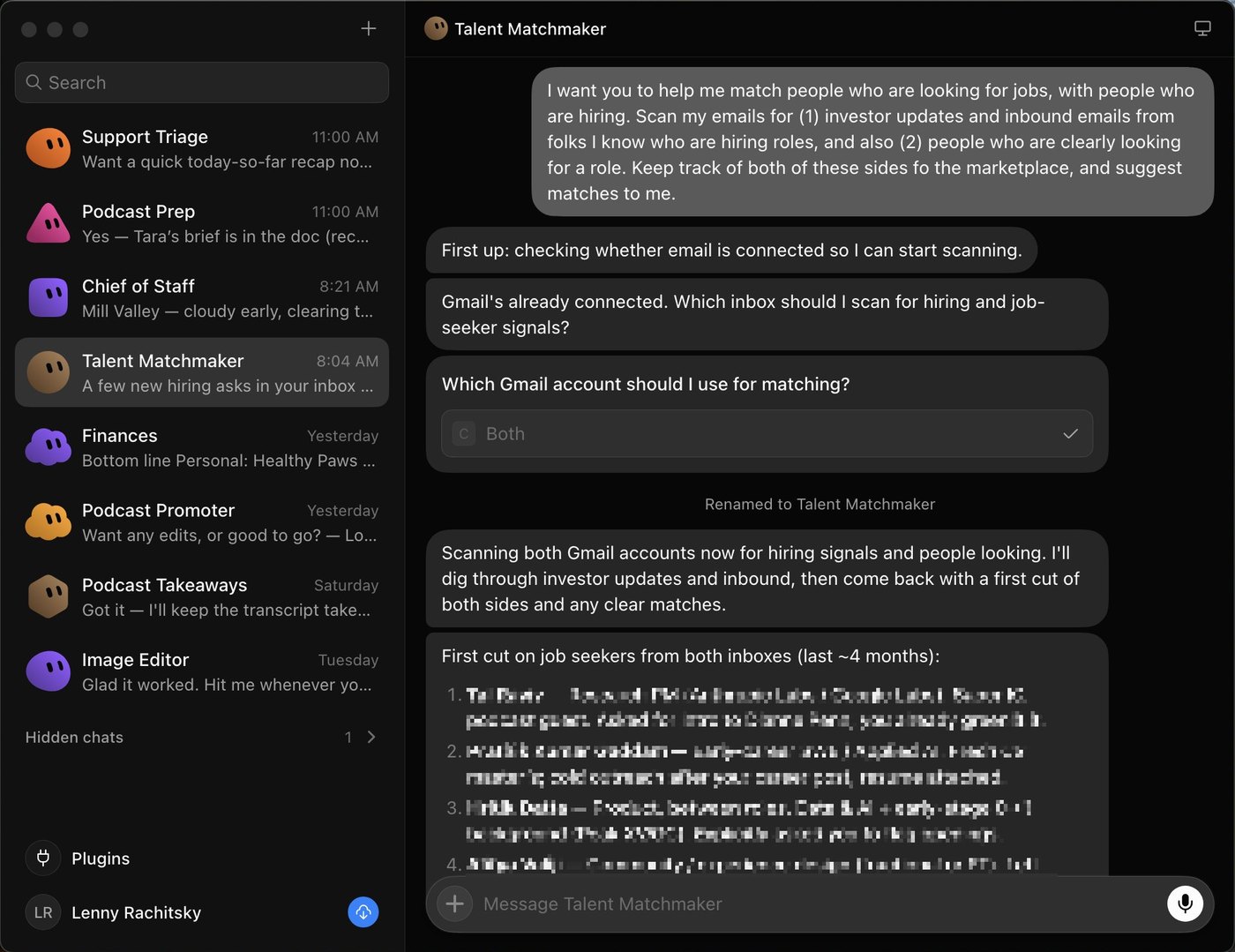
Image from Lenny Rachitsky’s post on X (1).
Who is actually behind this
Worth getting the corporate story straight, because it explains the speed. SpaceX acquired xAI on February 2 in an all-stock deal, IPO'd in June as SPCX in the largest listing in history, rebranded the AI unit SpaceXAI on July 6, and closed its $60 billion acquisition of Cursor on August 14. Three days later Cursor launched Origin, its agent-first GitHub alternative, in the middle of a GitHub outage. Grok Bot ships through Cursor's subscription tiers. This is one company assembling the model, the coding surface, the code host, and the agent workforce product in a single quarter.
The boundary that is not there
Now the part the launch threads skip. All of a user's bots share one cloud computer, and every login on it. Sessions created for one bot are readable by all of them; the vendor's own reviewers warn against using separate bots as a security boundary. There is no SOC 2 or ISO claim anywhere in the doc set, no dry-run mode, and per-action audit trails are "coming." Approvals are prose in a chat, not enforced policy. TechTimes put it structurally: an agent that reads your inbox with your sessions loaded is a phishing target that has already logged in.
Anthropic's computer-use guidance explicitly recommends against giving models account login access, because a logged-in agent turns every prompt injection into an authenticated action. Grok Bot's core design decision is exactly the thing that guidance warns about. That is not a reason to ignore the product. It is the reason governance is a layer, not a feature request: contained accounts, scoped credentials, human approval on money and outbound mail, and an audit trail you own.
The operator read
The agent teammate found its interface. The August 11 post argued the boundary between employee and agent is now just a login. Week one confirmed it, and named the org chart: specialists plus a coordinator, reporting to one human.
Capability is not the moat; packaging is. Multiple reviewers note the models underneath are not smarter than what Anthropic and OpenAI ship. The difference is that a non-engineer can staff a five-bot team in an afternoon. The "Claude Code moment for normie knowledge work," in Orosz's phrase, is a UX event, not a capability event.
Pilot it like you would a contractor with your passwords. Because that is literally the trust model. Start with a contained account, no payment rails, no send permissions, and measure completed work per week before widening scope. The companies that get value first will be the ones that treat "do whatever you want in there, bud" as a joke and not a policy.
Staffed, not installed.
Keep reading.
Teardowns, benchmarks and playbooks on building AI-native products.
Browse the Playbook →