Jensen Huang had an X account for years and never posted. On July 24, 2026, he finally had something he wanted on the record, and his first post ever was a letter.
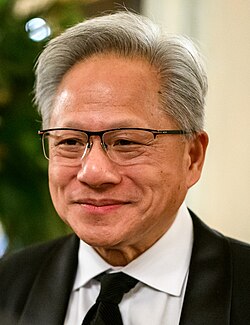
Huang
For my first post, I'm sharing a letter @NVIDIA signed on why open models matter. AI will transform every industry, power every company, and be built by every country. Open models strengthen safety and cybersecurity, accelerate innovation and diffusion, and enable sovereignty.
The letter is called "Open Weights and American AI Leadership." It published that morning with 25 signatories and one ask: do not restrict open-weight models before anyone has demonstrated the risks. The timing was not abstract. Washington was weighing a ban on Chinese AI models, and since nearly every frontier open-weight model is currently Chinese, a ban on Chinese models would in practice have been a ban on most of the working open ecosystem.
The day-one list was strange in a useful way: Nvidia, Microsoft, Meta, Mistral, Palantir, IBM, Andreessen Horowitz, Hugging Face, Mozilla, the Linux Foundation. A chip monopoly, a hyperscaler, two model labs, a defense contractor, a venture firm, and the open-source establishment do not normally fit on one page. Satya Nadella signed for Microsoft the same day:
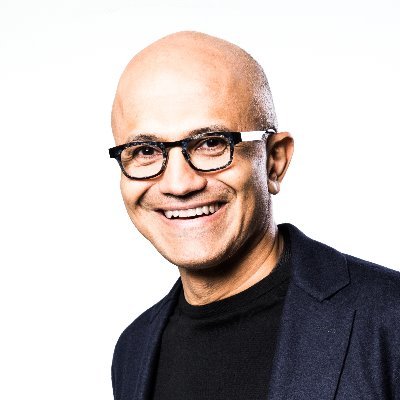
Nadella
Open-weight models are essential to a healthy AI ecosystem. Together with others across our industry, we are outlining a path for open-weight models to strengthen American competitiveness and expand economic opportunity, while protecting national security.
Now read the list for who is missing. On day one: OpenAI, Google, Anthropic, Amazon. The four biggest names in closed AI, all absent. For two of them, the absence lasted about a day.
Twenty-four hours of game theory
Sam Altman moved first, the same day, with an endorsement that was carefully not yet a signature:
Altman
i want the US to win in AI both in open source and proprietary models, and i am glad to see this
By the next morning OpenAI's name was on the letter itself. Investor Tyler Hogge, watching the list update in real time, called it a fascinating day of game theory, and that is the precise mechanism, not a quip. A letter like this changes the payoff table the moment it exists. Before it exists, silence on open weights is neutral. After it exists, silence is a position: the only obvious reason to stay off a list this broad is that you expect to benefit from the restriction it opposes. OpenAI, which had spent the year saying America should win in open models too, could not let that inference stand. Google, which already ships open weights, would have been contradicting its own product line by staying off. Signing cost either company nothing. Not signing got more expensive by the hour.
Sundar Pichai signed for Google on July 25, saying he was very happy to support it and pointing out that Google had been shipping open-weight Gemma models all along. That took the count to 50, double the launch list, inside a day. Aaron Levie had already said on day one that he was not sure anything in tech had ever drawn this much broad-based support. When Google landed, he called the round:

Levie
Now with Google on board, this is a complete endorsement of open weights AI. Pretty big moment for the industry.
The two that never signed
Anthropic and Amazon never joined. Not on day one, not in the fold-in, not in the three weeks since. And there are two honest ways to read that, so here are both.
The interest read. Anthropic runs the most valuable closed frontier in the world. Twenty days of Fable 5 darkness in June showed how much of the market runs through that one closed model, and Amazon is Anthropic's biggest cloud backer, selling that capacity through its own cloud. A strong, legally protected open ecosystem is the direct ceiling on both companies' pricing power. Of the fifty-plus companies asked to sign, the two with the least to gain are the two that declined. That is not a conspiracy. It is arithmetic.
The principled read. Anthropic's caution on open weights is not a talking point invented in July. It is a position the company has held for years, stated when it was unpopular and expensive: weights, once published, cannot be recalled, patched, or put behind a classifier, and the burden-of-proof argument in the letter cuts both ways when the harm you are worried about is irreversible. "They would say that" rebuts a motive, not an argument. Serious people at Anthropic believe it.
Both readings can be true at once, and probably are. The way to keep yourself honest is to make each one falsifiable. If Anthropic ever ships open weights for a genuinely capable model, retire the interest read. If it ever backs restrictions on open models that conveniently exempt closed APIs, retire the principled one. Until one of those happens, hold both.
A letter is direction, not weights
Keep the object in perspective: fifty signatures moved zero parameters onto Hugging Face. A letter tells you where the industry wants the law to go. It does not open a single model. Three days after publication, Huang gave the argument behind it its sharpest form:
Huang
Attackers have frontier AI. Defenders need a frontier AI ecosystem—the best open and closed models, force-multiplied by a global community. During the Hugging Face incident, closed AI blocked essential forensics. An open-weight frontier model helped contain the intrusion.
So the thing to watch after July 24 was follow-through, and the first hard US follow-through came from a signatory seventeen days later. On August 10, Meta shipped Muse Glimmer: a 30B model under Apache 2.0, small enough to run on one consumer GPU. Meta's flagship stayed closed, and a 30B distillation is not the frontier. It is still the first time since the letter that an American signatory converted direction into a downloadable file. Signature to weights: seventeen days. That is the metric worth tracking.
What this means if you buy AI
Part 1 of this series made the case for an open-weight fallback: a weights file inside your network that no vendor, and no export directive, can switch off. The open question hanging over that architecture was never technical. It was legal: Washington could make the fallback itself contraband, and in July that was a live proposal. The risk did not vanish on July 24. But it now has Nvidia, Microsoft, OpenAI, and Google lobbying against it by name, in public, on the record. The ecosystem your fallback depends on now has most of the industry publicly committed to keeping it legal.
The list is diagnostic in the other direction, too. Your model vendor's name, on it or off it, tells you exactly how they feel about your exit option. Ask them about it in the next pricing call.
Fifty companies signed a direction. One of them has shipped a file.
Signed is not shipped.
Keep reading.
Teardowns, benchmarks and playbooks on building AI-native products.
Browse the Playbook →